
Flat Tennis Shoes for Weightlifting: The Ultimate Guide
Discover why flat tennis shoes are a top choice for weightlifting. Learn about stability, grip, and the best features for your lifts.
VIEW TOP PICKSShoesTruth Philosophy: We believe that the right pair of shoes can change everything. Explore our comprehensive guides on shoes, footwear care, and styling to build your ultimate collection with confidence.
Why Flat Tennis Shoes Are a Smart Choice for Weightlifting
When you step into the gym for a heavy lifting session, the shoes on your feet are more than just an accessory—they are a critical piece of equipment. While specialized weightlifting shoes with a raised heel are excellent for squats and Olympic lifts, many lifters are discovering the distinct advantages of flat tennis shoes for weightlifting. These shoes offer a unique combination of stability, ground feel, and versatility that can benefit a wide range of strength training exercises, particularly deadlifts, overhead presses, and general gym work.
The primary reason flat shoes are favored by many strength athletes is their lack of a cushioned heel. A raised or soft heel can compress under a heavy load, causing instability and shifting your weight forward. A flat, firm sole, like those found on many tennis shoes, allows your foot to sit naturally on the ground, creating a solid, stable base. This direct connection to the floor is crucial for generating maximum force and maintaining proper form during heavy lifts.
The Science of Stability: Why Flat Matters
Lifting heavy weights is all about physics. When you perform a deadlift or a squat, you are trying to move a heavy load along a specific path. Any movement that isn't directly related to lifting the weight is wasted energy. A stable base is non-negotiable. A shoe with a compressible sole, like a running shoe with thick foam cushioning, is designed for shock absorption during forward motion. In weightlifting, this cushioning is your enemy. It creates a wobbly, unstable platform, forcing your muscles to work harder just to keep you balanced.
Flat tennis shoes, with their firmer, lower-profile soles, minimize this compression. They bring you closer to the ground, which enhances your proprioception—your body's ability to sense its position in space. This heightened awareness allows for more precise movements and better muscle activation. For anyone who has ever struggled with the feeling of being "tippy" during a heavy lift, transitioning to a flatter, more stable shoe can be a game-changer. For those exploring a versatile training solution, you might find that shoes for both running and lifting often share these flat, stable characteristics.
Key Features to Look For in a Flat Lifting Shoe
Not all tennis shoes are created equal. To find the best flat tennis shoes for weightlifting, you need to look for specific design features that prioritize stability over speed or cushioning.
- Firm, Non-Compressible Sole: This is the most critical feature. The sole should be hard and dense, ideally made of a hard rubber or durable polyurethane. It should not compress under weight. A good test is to press your thumb into the sole—if it squishes easily, it's too soft.
- Minimal Heel-to-Toe Drop: A "zero drop" or very low drop (0-4mm) is ideal. This mimics the natural position of your foot when standing barefoot, promoting a balanced stance.
- Wide and Stable Base: A wider sole, especially in the forefoot, provides a larger surface area for contact with the ground, enhancing lateral stability. This is particularly important for exercises like squats and lunges. For those with wider feet, finding comfortable shoes for wide feet that are also firm can be a challenge, but some tennis models fit the bill.
- Secure and Snug Fit: Your foot should not slide inside the shoe. A snug fit, often achieved with a robust lacing system or even a hook-and-loop closure, ensures that your foot and the shoe act as a single, solid unit. Some lifters prefer men's tennis shoes with velcro closure for this reason, as they allow for a very precise, locked-in fit.
- Durable Upper: The upper material should be tough and resistant to wear from the friction of lifting and the pressure of the weights. Leather, suede, or heavy-duty synthetic mesh are all good options.
Which Lifts Benefit Most from Flat Shoes?
While you can use flat shoes for almost any gym activity, they truly excel in specific lifts where stability is paramount.
The Deadlift: This is where flat shoes shine. Because you are pulling the weight from the floor, being closer to the ground reduces the distance you have to pull. A flat, hard sole provides a solid base to push through your legs. The lack of a raised heel also encourages a more horizontal shin angle, which can be beneficial for lifters who struggle to get their hips down into the starting position.
The Overhead Press: A stable base is crucial for pressing a weight overhead. Any wobble in your feet translates directly to the bar path. Flat shoes help you stay grounded and drive force directly into the floor.
The Bench Press: For the bench press, the primary point of contact is your upper back, but your feet provide the "leg drive" that helps you stabilize your entire body. Flat shoes offer a solid connection to the floor, allowing you to generate tension and power from the ground up.
General Gym Work: Exercises like lunges, farmer's walks, and even cardio on a stationary bike can be done more comfortably and safely with a stable, flat shoe. For general fitness, finding comfortable shoes for travel that are also flat and stable can be a great two-in-one solution for a gym bag.
Flat Shoes vs. Dedicated Weightlifting Shoes
It's important to understand the distinction between flat tennis shoes and dedicated weightlifting shoes (often called "lifters"). Dedicated lifters feature a hard, non-compressible sole and a significant raised heel (usually 0.5 to 1 inch). This raised heel is advantageous for:
- Improving Ankle Mobility: The heel lift reduces the amount of ankle dorsiflexion required to reach depth in a squat, helping lifters with limited ankle mobility.
- Encouraging an Upright Torso: In Olympic lifts like the snatch and clean and jerk, the heel helps the lifter maintain a more vertical torso, keeping the bar over their center of mass.
However, for deadlifts, the raised heel can be a disadvantage, as it puts you in a more forward-leaning position and increases the distance you have to pull. Many powerlifters will therefore use their dedicated lifters for squats and presses but switch to a flat shoe (or even go barefoot or in socks, if the gym permits) for the deadlift. A good pair of flat tennis shoes offers a versatile middle ground—they are more stable than running shoes for lifting, but more practical for other gym activities than a specialized pair of lifters. For those exploring the market, it's wise to check out shoe websites that specialize in athletic footwear to compare options.
Making the Right Choice for Your Training
When selecting your flat tennis shoes for weightlifting, consider your specific needs. If you are a powerlifter focusing on the "big three" (squat, bench, and deadlift), you might want a specialized flat shoe just for deadlifts. If you are a general fitness enthusiast who lifts and does other forms of training, a versatile flat tennis shoe is an excellent all-rounder.
Try on several pairs to see what feels best. Walk around, do a few bodyweight squats, and see how the shoe feels. The shoe should feel firm, stable, and connected to the ground, not squishy or unstable. Remember that a good fit is crucial for performance and injury prevention. Investing in a quality pair of flat shoes is an investment in your training and your safety. While they may not have the flashy designs of some other athletic shoes, their performance benefits are undeniable.
Recommended Flat Tennis Shoes for Weightlifting
⚠️ AFFILIATE DISCLOSURE: This website contains affiliate links. As an affiliate Associate, we earn from qualifying purchases. If you make a purchase through these links, we may receive a small commission at no additional cost to you. Read our full affiliate policy.

Womens Gym Barefoot Shoes Zero Drop Workout Sneakers(White/ Gum,7.0) | Breathable Stretchy Knit Upper Lightweight Flexible Sole for Lifting, Cross Training, Fitness
Check price on Amazon
Nike Men's Air Max Alpha Trainer 6 Workout Shoes,White/White/Black/Gum Medium Brown,9
Check price on Amazon
WCIDFY Barefoot Shoes Women Zero Drop Walking Minimalist Sneakers Black 6.5 | Breathable, Lightweight Thin Flexible Rubber Sole, Easy On/Off, Natural Movement, Strengthens Foot Muscles
Check price on Amazon
Barefoot Shoes Women Casual Sneakers,Wide Toe Box Shoe Women Zero Drop Shoe | Barefoot Shoes Men,Minimalist Trail Running Shoe,Non-Slip Lightweight Breathable Comfortable Fashion Walking Hiking Shoes
Check price on Amazon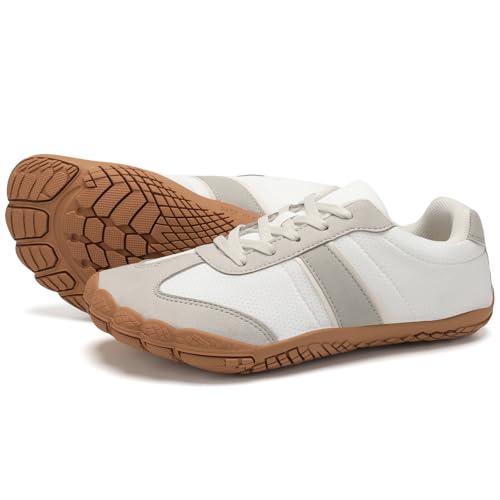
Grand Attack Barefoot Shoes Women,Wide Toe Box Minimalist Zero Drop Walking Shoes Lightweight Cross Training Trail Running Wrestling Weightlifting Fitness Barefoot Gym Sneakers Grey White Size 8
Check price on AmazonFrequently Asked Questions
Can I wear flat tennis shoes for squats? Yes, you can. However, if you have limited ankle mobility, a dedicated weightlifting shoe with a raised heel might be more comfortable. For many lifters, a flat shoe works perfectly fine for squats.
Are flat shoes better for deadlifts? Yes, generally. The flatter sole puts you closer to the ground and can help you generate more force from the floor. It also encourages a more efficient pulling position.
How do I know if a shoe is flat enough? Look for a "heel-to-toe drop" of 0-4mm. You can often find this specification on the shoe's product page. A simple in-store test is to try and fold the shoe in half; if it bends easily in the middle, the sole is too soft.
Can I use flat shoes for running? Flat tennis shoes are generally not ideal for running, especially on hard surfaces. They lack the cushioning and support needed to absorb the repetitive impact of running. For a hybrid option, look for shoes specifically designed for both activities, like shoes for both running and lifting.