
Men's Shoe Sizes: The Complete Guide to Finding Your Perfect Fit
Stop guessing and start walking comfortably. Learn how to measure your feet accurately, convert between US, UK, EU, and CM sizes, and understand width and arch to find your ideal pair every time.
Why Men's Shoe Sizing Matters: Wearing the wrong shoe size isn't just uncomfortable—it can lead to blisters, joint pain, and long-term foot problems. This guide gives you the tools to measure your feet correctly and translate those measurements into the right size for any brand, anywhere in the world.
How to Measure Your Men's Shoe Size at Home
Before you look at any size chart, you need accurate measurements. Follow these four simple steps to get your true foot length and width. Do this at the end of the day when your feet are at their largest.
Gather Your Tools
You'll need a piece of paper larger than your foot, a pencil, a ruler or measuring tape, and a wall or flat surface to stand against. Wear the socks you plan to use with your new shoes.
Trace Your Foot
Place the paper on a hard floor against a wall. Stand with your heel touching the wall. Keep your weight evenly distributed. Use the pencil to trace the outline of your foot, holding it perpendicular to the paper.
Measure Length & Width
Measure from the heel line to the tip of your longest toe—this is your foot length. Then measure across the widest part of your foot (usually the ball) for width. Repeat for both feet.
Use the Larger Foot
Most people have one foot slightly larger than the other. Always use the measurements from your larger foot when consulting a size chart. Add 0.2 to 0.5 inches (5–12 mm) for toe room.
Men's Shoe Size Conversion Chart
Use this comprehensive chart to convert your foot length (in centimeters) into US, UK, and EU men's shoe sizes. For best results, measure your foot as described above and find the closest match.
| Foot Length (cm) | US Men's | UK Men's | EU Size | Japan (cm) |
|---|---|---|---|---|
| 23.5 | 6 | 5.5 | 39 | 24 |
| 24.1 | 6.5 | 6 | 39.5 | 24.5 |
| 24.4 | 7 | 6.5 | 40 | 25 |
| 24.8 | 7.5 | 7 | 40.5 | 25.5 |
| 25.4 | 8 | 7.5 | 41 | 26 |
| 25.7 | 8.5 | 8 | 42 | 26.5 |
| 26.0 | 9 | 8.5 | 42.5 | 27 |
| 26.7 | 9.5 | 9 | 43 | 27.5 |
| 27.0 | 10 | 9.5 | 44 | 28 |
| 27.3 | 10.5 | 10 | 44.5 | 28.5 |
| 27.9 | 11 | 10.5 | 45 | 29 |
| 28.3 | 11.5 | 11 | 45.5 | 29.5 |
| 28.6 | 12 | 11.5 | 46 | 30 |
| 29.4 | 13 | 12.5 | 47 | 31 |
| 30.2 | 14 | 13.5 | 48 | 32 |
Understanding Men's Shoe Width
Length is only half the story. Two men with the same foot length can need completely different shoe widths. Here's what the letters mean and how to find your fit.
Men's Width Letters Explained
Most men's shoes are available in multiple widths, though many brands only stock the standard "D" width. Here's the breakdown:
- B / Narrow: For slim feet. Often special order only.
- D / Medium (Standard): The default width for most men's shoes.
- 2E / Wide: For broader feet or those who need extra room in the toe box.
- 4E / Extra Wide: For very broad feet, often available in work and comfort shoes.
If you have wide feet, look for brands that specialize in wide width shoes. For narrow feet, explore narrow shoes or consider sizing down in length if the width is snug but not painful.
Shoe Size Conversion Tips for International Brands
🇺🇸 US to UK Sizing
US men's sizes are typically 0.5 to 1 size larger than UK men's sizes. For example, a US 9 is roughly a UK 8.5. This varies slightly between brands, especially for athletic shoes versus dress shoes.
🇪🇺 US to EU Sizing
European sizes use a different scale entirely. A US 9 men's shoe is approximately an EU 42.5. The conversion isn't linear, so always check the brand's specific chart if possible. Our international size chart covers more regions.
📏 Half Sizes and Fit
Half sizes exist to fine-tune fit. If you're between sizes, go with the larger size for athletic shoes (feet swell during activity) and the smaller size for leather dress shoes (they stretch slightly). Our half size guide explains this in more detail.
Beyond the Number: Other Fit Factors to Consider
Your shoe size is a starting point, but these elements also affect comfort and performance.
Arch Type
Your arch determines how your foot distributes weight. If you have flat feet, look for flat feet shoes with added support. High arches need high arch shoes with cushioning. Neutral runners should consider neutral shoes.
Toe Box Shape
A round toe shoe offers the most natural fit. Square toe shoes provide extra room but can look less formal. The shape should match your foot's natural outline.
Shoe Category
Different categories fit differently. Running shoes often run small, so size up. Leather shoes stretch over time. Sneakers vary wildly by brand. Always read brand-specific reviews.
Break-In Period
New shoes—especially leather ones—need time to mold to your feet. Check our break-in guide for tips on how to do this without pain. If shoes are uncomfortable after two weeks, the size is likely wrong.
Top-Rated Men's Shoes for Every Size
⚠️ AFFILIATE DISCLOSURE: This website contains affiliate links. As an affiliate Associate, we earn from qualifying purchases. If you make a purchase through these links, we may receive a small commission at no additional cost to you. Read our full affiliate policy.

Vans Men's Brooklyn LS Shoe, Suede/Canvas Black/White, 11.5
Check price on Amazon
Water Shoes Men Women Quick-Dry Aqua Socks Swim Beach Barefoot Yoga | Exercise Wear Sport Accessories Pool Camping Must Haves Adult Youth Size 13-14 Women/12-13 Men
Check price on Amazon
Raoendis Mens Running Shoes Slip On Walking Shoes Casual Lightweight Workout Non Slip Athletic Gym Tennis Sport Shoes Comfortable Fashion Sneakers Black Size 14
Check price on Amazon
Mens Walking Shoes Slip on Lightweight Comfortable Running Shoes Workout Tennis Athletic Shoes Gym Sneakers Black Size 13
Check price on Amazon
Nike Air Monarch IV Training Shoe (4E) - White/Black/Varsity Red, Size 11 US
Check price on Amazon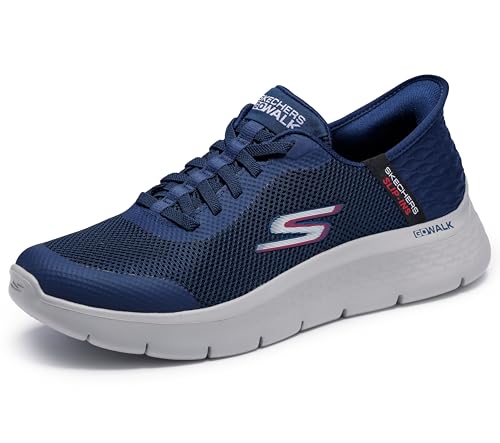
Skechers Men's Hands Free Slip-ins: Go Walk Flex Hands Up Sneaker, Navy, 11 X-Wide
Check price on Amazon
HEYDUDE Wally Canvas Mono Black/Clay Size 10, Men’s Shoes, Slip-on Loafers, Comfortable & Light-Weight
Check price on Amazon
Reebok Royal BB4500 Hi2 High Top Sneakers for Men, Black or White Mens Basketball Shoes, Medium or Wide Width Size 7 to 14 Athletic Mens Shoes, Black/Alloy, 11 Extra Wide
Check price on AmazonFrequently Asked Questions About Men's Shoe Sizes
Should I size up or down if I'm between sizes?
It depends on the shoe type. For athletic shoes, size up to prevent blisters and allow for foot swelling. For leather dress shoes, size down if the shoe feels slightly loose, as leather will stretch. For casual sneakers, go with the larger size if your toes touch the front.
Do men's shoe sizes change with age?
Yes. Feet can grow longer and wider over time due to weight gain, arch collapse, or natural aging. It's a good idea to re-measure your feet every year or two, especially if you notice discomfort in shoes that used to fit well.
How do I know if my shoes are too small?
Signs include: your toes hit the front when walking, the widest part of your foot feels pinched, you experience numbness or tingling, or you get blisters regularly. If any of these occur, try a half size up or a wider width. Use our fit measurement guide for a more precise check.
Why do different brands fit differently?
Each brand uses its own "last"—the foot-shaped mold a shoe is built around. Some lasts are narrower, some wider, some have more arch support. That's why you might be a 9 in one brand and a 9.5 in another. Always check the brand's specific sizing notes or reviews before buying.
What is the most common men's shoe size?
In the United States, the most common men's shoe size is around a US 10 to 10.5, with a medium (D) width. However, this varies by region and population. Globally, sizes tend to range from US 8 to US 11 for most adult men.
Continue Your Sizing Journey
Now that you know your men's shoe size, explore these related guides to build a wardrobe that fits perfectly.