
Welted Construction Shoes: The Complete Guide to Welted Footwear
Unlock the secrets of welted construction—the gold standard in shoemaking. Learn how Goodyear welt, stitchdown, and Blake stitch affect durability, comfort, and resoleability so you can invest in footwear that lasts for decades, not seasons.
Why Welted Construction Matters for Your Footwear Investment
If you've ever wondered why some shoes cost $80 while others command $400 or more, the answer often lies in one crucial detail: welted construction. This traditional shoemaking method mechanically attaches the upper to the sole using a strip of leather called a "welt," creating a bond that is both flexible and extraordinarily durable. Unlike cemented shoes where glue is the primary fastener, welted footwear can be repaired, resoled, and restored multiple times—making it the smartest long-term investment for anyone who values quality.
In this comprehensive guide, we'll break down the three main types of welted construction, compare their pros and cons, explain how to identify quality welted shoes, and help you decide whether this construction method aligns with your lifestyle and budget. By the end, you'll have the confidence to invest in welted footwear that serves you for years.
What Exactly Is Welted Construction?
Welted construction is a shoemaking technique where a strip of leather (the welt) is stitched to both the upper and the insole, creating a durable foundation. The sole is then attached to this welt, rather than being glued directly to the bottom of the shoe. This mechanical bond is what gives welted shoes their legendary durability.
The key advantage is resoleability. When the sole wears down, a skilled cobbler can remove it and stitch on a new one without damaging the upper. This process can typically be repeated two to four times over the shoe's lifetime. According to our long-lasting shoes guide, welted footwear often outlasts glued alternatives by a factor of three to five.
Beyond longevity, welted construction also offers superior water resistance (the welt creates a barrier against moisture) and better structural integrity over time. The trade-off is higher initial cost and a break-in period, but for many buyers, the investment pays for itself within a few years.
Key Takeaway
Welted construction = mechanically stitched sole = resoleable = longer lifespan. It's the difference between a disposable shoe and an heirloom-quality investment.
The 3 Main Types of Welted Construction Compared
Not all welted shoes are created equal. Each method has distinct characteristics affecting flexibility, water resistance, cost, and repairability. Here's how they stack up:
Goodyear Welt
Most PopularHow it works: A welt is stitched to the upper and insole, then the sole is stitched to the welt. A cork layer fills the cavity, molding to your foot over time.
- Pros: Highly water-resistant, very durable, easiest to resole, excellent arch support
- Cons: Stiffer break-in, heavier, higher cost ($250–$800+)
Best for: Leather shoes, Oxfords, Derbys, work shoes, and brogues where durability is paramount.
Stitchdown Construction
Best FlexibilityHow it works: The upper is folded outward and stitched directly to the midsole, creating a distinctive outward-flared look.
- Pros: More flexible from day one, lighter weight, excellent for wider feet, very durable
- Cons: Less water-resistant than Goodyear, harder to resole cleanly, limited styles
Best for: Work boots, safety shoes, and casual leather footwear where comfort and flexibility matter most.
Blake Stitch
Sleekest ProfileHow it works: The upper is stitched directly to the sole with a single stitch, eliminating the need for a separate welt.
- Pros: Slim, elegant profile, lightweight, more affordable ($150–$400), flexible
- Cons: Less water-resistant, harder to resole, less durable than Goodyear
Best for: Dress shoes, loafers, and monk straps where a refined silhouette is essential.
How to Identify Quality Welted Shoes Before You Buy
Check the Welt Stitching
Look for consistent, tight stitches along the welt. Uneven or loose stitching indicates lower quality. A good welt has 6–10 stitches per inch.
Examine the Sole
Quality welted shoes use leather soles or high-density rubber soles. Avoid thin, spongy soles that won't hold up to resoling.
Look for a Cork Bed
Goodyear welted shoes feature a cork layer that molds to your foot. This is a hallmark of quality construction and superior comfort.
Inspect the Leather Quality
Full-grain or top-grain leather is essential. Cheap corrected-grain leather won't age well, even with welted construction.
Check the Heel Construction
A stacked leather or rubber heel that's nailed and stitched is a sign of quality. Plastic heels are a red flag.
Feel the Weight
Welted shoes are heavier than cemented ones—this is normal. If a "welted" shoe feels suspiciously light, it may be mislabeled.
Welted vs. Non-Welted: Which Is Right for You?
| Factor | Welted Construction | Non-Welted (Cemented/Injection Molded) |
|---|---|---|
| Durability | Excellent (5–15+ years) | Moderate (1–3 years) |
| Resoleability | Yes, 2–4 times | No, or very limited |
| Water Resistance | Good to Excellent | Poor to Moderate |
| Initial Cost | $200–$800+ | $50–$150 |
| Break-In Period | 1–4 weeks | Minimal |
| Best For | Long-term investment, work, formal wear | Casual wear, fast fashion, budget buyers |
If you're looking for footwear that you can wear daily for years and repair instead of replace, welted construction is the clear winner. For occasional wear or tight budgets, budget-friendly shoes with cemented construction may suffice.
Caring for Your Welted Construction Shoes
Welted shoes are an investment, and proper care extends their lifespan dramatically. Here's what you need to know:
- Clean regularly: Use a horsehair brush to remove dirt after each wear. For deep cleaning, follow our leather cleaning guide.
- Condition the leather: Apply a quality leather conditioner every 4–6 weeks to prevent drying and cracking.
- Use shoe trees: Cedar shoe trees absorb moisture and maintain shape. This is non-negotiable for welted shoes.
- Rotate your pairs: Never wear the same pair two days in a row. Give them 24 hours to dry and recover.
- Waterproof responsibly: Use a waterproofing guide to protect against moisture without clogging the leather's pores.
- Resole before it's too late: When the sole wears thin, visit a cobbler. Waiting too long can damage the welt and upper. See our sole replacement guide.
With proper care, a quality pair of welted shoes can last 10–20 years, making the initial investment remarkably cost-effective. For more tips, explore our shoe care and repair hub.
Pro Tip
Always use a shoe horn when putting on welted shoes. This protects the heel counter and prevents premature wear—a small habit that adds years to your footwear.
Recommended Welted Construction Shoes
⚠️ AFFILIATE DISCLOSURE: This website contains affiliate links. As an affiliate Associate, we earn from qualifying purchases. If you make a purchase through these links, we may receive a small commission at no additional cost to you. Read our full affiliate policy.

Steel Toe Shoes for Men Women , Black Work Shoes, Men Size 10 / Women 11.5 | Indestructible Comfortable Safety Sneakers, Lightweight Breathable Construction Shoes, Puncture Proof Ergonomic Design
Check price on Amazon
Furuian Steel Toe Boots for Men Women Lightweight Work Boots Pioneer Series | ASTM Certificated Safety Shoes, Width Options, Non Slip Rubber Sole, Comfortable Work Shoes for Construction, Warehouse, Yard
Check price on Amazon
Skechers Men's Cankton Steel Toe Construction Shoes, Navy, 10.5 M US
Check price on Amazon
WELTFORGE Men's Chukka Classic Casual Desert Boots | Welted ConStruction,Water Repellent Suede Leather Upper,Cushioned PU Sponge Insole,Lightweight Rubber Foam Sole
Check price on Amazon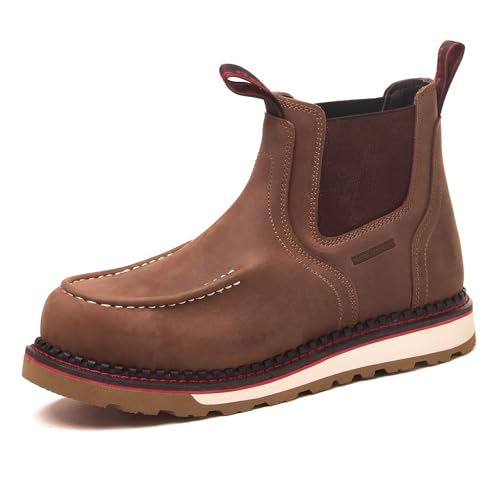
MWORK Welted Blunt Slip-On Men's 6" Moc Toe Water-Resistant Work Boots,Comp Toe, Puncture Proof,Non-Slip Wedge Sole,Coolmax Comfort Leather Safety Boot,Anti-Fatigue,ASTM F2413 Electrical Hazard RR7130
Check price on Amazon
SKPRO Construction Work Boots for Men Steel Toe Welted (Maroon, 12W) | Wide Toe Box, ASTM F2413-24 Standard, Premium Stitched, Oil & Slip & Water Resistance, Durable Welted Sole, EH Protection
Check price on Amazon
MWORK Men's 6" Moc Toe Waterproof Composite Toe Work Boots, Premium Leather Work Boots with Welted Construction, Puncture Resistant, Slip Resistant Wedge Sole, COOLMAX Lining, ASTM F2413-18 EH Rated
Check price on AmazonYour Welted Shoe Buying Checklist
Confirm the construction method — Ask the seller or check the product description. "Goodyear welt" or "Blake stitch" should be explicitly stated.
Verify your size — Welted shoes often run slightly larger. Use our fit measurement guide and check men's or women's size charts.
Check the return policy — Welted shoes have a break-in period. Ensure you can return them if the fit isn't right.
Budget for care accessories — Shoe trees, conditioner, and a horsehair brush are essential. Factor these into your total cost.
Consider resoleability — Check if the brand offers resoling services or if local cobblers can service the shoes. See our sole replacement guide.
Read our first shoe checklist — It covers everything you need to know before making any footwear purchase.
Final Thoughts: Is Welted Construction Worth It?
If you're tired of replacing worn-out shoes every year, welted construction is absolutely worth the investment. The upfront cost is higher, but when you divide it over 10+ years of wear (and multiple resoles), welted shoes often cost less per year than their disposable counterparts. They're better for your feet, better for the environment, and undeniably better looking as they age.
For those who wear dress shoes, work shoes, or boots regularly, welted construction is the smart choice. If you're shopping on a tight budget or only need occasional footwear, cemented shoes may be more practical—but you'll sacrifice longevity and repairability.
Whichever path you choose, make sure you're informed. Explore our material and build hub for more guides on shoe construction, and check our shopping and reviews hub for brand-neutral comparisons. Your feet—and your wallet—will thank you.