
Closed Toe Sandals for Plantar Fasciitis: The Complete Support Guide
Discover how closed toe sandals can relieve heel pain, protect your feet, and keep you comfortable all day. Learn the exact features that matter before you buy your next pair.
SEE RECOMMENDED SANDALSWhy this matters: Plantar fasciitis causes sharp heel pain that worsens with every step on hard surfaces. The right closed toe sandal can offload the plantar fascia, support your arch, and cushion your heel, turning a painful walk into a comfortable one. This guide explains exactly what to look for, so you can buy with confidence.
Understanding Plantar Fasciitis and Footwear
Plantar fasciitis is inflammation of the thick band of tissue that runs along the bottom of your foot, connecting your heel bone to your toes. It commonly causes a stabbing pain near the heel, especially with the first steps in the morning or after long periods of standing. Because the condition is aggravated by poor arch support, hard surfaces, and unsupportive footwear, the shoes you wear play a direct role in how much pain you feel.
Unlike dress shoes or thin-soled flats, a well-designed closed toe sandal can deliver structured arch support, heel cushioning, and a stable base without overheating your feet. If your pain is more severe, you may also benefit from dedicated arch support shoes for plantar fasciitis or good running shoes for plantar fasciitis, depending on your activity level. Many people find that rotating between supportive sandals and cushioned sneakers gives the best results.
For those who need extra room or have sensitive feet, wide width sandals for plantar fasciitis and extra extra wide sandals for swollen feet are worth considering alongside standard-width options. The goal is always the same: keep the plantar fascia from overstretching while cushioning every step.
Why Closed Toe Sandals Are a Smart Choice
Closed toe sandals combine the airflow and easy on-off convenience of a sandal with the structure of a supportive shoe. For plantar fasciitis, that combination offers several practical advantages over open toe designs.
First, the closed front keeps your toes protected and prevents your foot from sliding forward, which can reduce the stretching force on the plantar fascia. Second, many closed toe sandals come with a contoured footbed and a slightly elevated heel that takes tension off the fascia. Third, the enclosed front allows for a more secure fit around the forefoot, so the arch support stays exactly where it should be instead of shifting as you walk.
If you prefer a more open style for hot days, you can still explore comfortable sandals for standing all day or comfortable walking sandals for flat feet, but a closed toe option often provides the most consistent support for heel pain. Some people also pair sandals with over-the-counter orthotics for flat feet to fine-tune the fit.
Key Features to Look For
Not every closed toe sandal is built for plantar fasciitis. Use the checklist below to evaluate any pair before you buy.
Firm Arch Support
The arch support should feel firm and match the natural curve of your foot. A soft, flat footbed will not offload the plantar fascia and may make pain worse.
Cushioned Heel
A shock-absorbing heel pad reduces impact on the inflamed tissue, especially on concrete and tile floors.
Slight Heel Elevation
A modest heel of about 1 inch (2.5 cm) shortens the plantar fascia and can reduce morning pain.
Adjustable Straps
Hook-and-loop closures let you customize the fit across the instep and forefoot for secure, pressure-free support.
Stable Outsole
A wide, non-flexible base with good traction keeps your foot stable and prevents excessive pronation.
Removable Insole
A removable footbed lets you insert custom or over-the-counter orthotics without cramping your toes.
If you need additional arch support for other foot conditions, such as flat feet or high arches, products like sneakers with arch support for flat feet and comfortable flat wedding shoes for bride show how different footwear categories handle support. The same principles apply to sandals: firm support, cushioning, and a secure fit.
Closed Toe vs Open Toe Sandals for Plantar Fasciitis
The table below summarizes the practical differences so you can decide which style suits your daily routine.
| Feature | Closed Toe Sandals | Open Toe Sandals |
|---|---|---|
| Toe Protection | Excellent | Limited |
| Arch Support Potential | High | Moderate to High |
| Foot Stability | High | Moderate |
| Breathability | Good | Excellent |
| Best For | Work, walking, daily wear | Beach, casual, hot weather |
If you want a more open feel but still need support, you can compare options like comfortable platform sandals for walking and waterproof sandals for plantar fasciitis to see how different designs handle cushioning and stability.
Pros and Cons of Closed Toe Sandals
Pros
- Structured arch support relieves plantar fascia tension
- Heel cushioning reduces impact on hard floors
- Closed front protects toes and keeps feet stable
- Adjustable straps accommodate swelling and bunions
- More breathable than closed shoes in warm weather
Cons
- Less airflow than open toe sandals
- Some models lack removable insoles
- Not ideal for high-impact sports
- Premium orthopedic options can be costly
- Fit can be tricky for very wide feet
For people who stand for long hours, combining a supportive sandal with accessories such as insoles for standing on concrete all day or shock absorbing insoles for shin splints can further improve comfort.
Fit and Sizing Tips for Plantar Fasciitis Sandals
Even the best sandal will not help if it does not fit correctly. Follow these guidelines to get the most relief.
1. Measure at the end of the day. Feet swell during the day, so shopping in the afternoon or evening helps you find the right size.
2. Check the arch alignment. Your arch should sit directly on the footbed's support, with no gap and no pressure point.
3. Leave a thumb's width at the front. Your longest toe should sit about 1 cm from the front of the sandal to prevent jamming.
4. Test the heel cup. Your heel should sit snugly without slipping, and the back of the sandal should not rub.
5. Adjust straps for security. Tighten until your foot feels stable but not compressed. If you have swollen feet, look at extra wide velcro shoes for swollen feet and men's extra wide sandals for swollen feet for more forgiving fits.
If you are also shopping for work footwear, guides like comfortable work shoes with arch support and professional shoes for plantar fasciitis can help you apply the same fit principles to other shoe types.
How Much Do Closed Toe Sandals for Plantar Fasciitis Cost?
Prices depend on the brand, materials, and level of orthopedic support. Here is a realistic breakdown of the current market.
| Category | Typical Price Range | What You Get |
|---|---|---|
| Budget | $40–$70 | Basic arch support, limited cushioning |
| Mid-Range | $70–$110 | Firm arch support, cushioned heel, adjustable straps |
| Premium | $110–$160 | Orthopedic footbed, premium materials, removable insole |
| Custom Orthotics | $200–$500+ | Podiatrist-prescribed inserts for severe cases |
Most people with mild to moderate plantar fasciitis find relief in the $70–$110 range. If your pain is severe or persistent, investing in a premium pair or custom orthotics is often more cost-effective than repeatedly buying cheap sandals that do not help.
Ready to Find Your Perfect Pair?
Browse our recommended closed toe sandals for plantar fasciitis, selected for arch support, heel cushioning, and everyday comfort.
VIEW RECOMMENDED SANDALSFrequently Asked Questions
Are closed toe sandals good for plantar fasciitis?
Yes. Closed toe sandals can be an excellent choice because they combine breathability with structured arch support, heel cushioning, and a secure fit. The closed front also protects the toes and helps prevent the foot from sliding forward, which reduces strain on the plantar fascia.
What features should I look for in closed toe sandals for plantar fasciitis?
Look for firm arch support, a cushioned heel, a slight heel elevation of about 1 inch, a contoured footbed, adjustable straps, and a stable outsole with good traction. A removable insole is a bonus because it lets you insert custom orthotics.
Can I wear closed toe sandals all day with plantar fasciitis?
Supportive closed toe sandals with firm arch support and heel cushioning can be worn all day, especially in warm weather or on casual days. For long periods on hard concrete or during high-impact activity, a dedicated supportive shoe may be a better choice.
How much do closed toe sandals for plantar fasciitis cost?
Basic supportive options generally cost between $40 and $70, mid-range pairs range from $70 to $110, and premium orthopedic sandals typically cost $110 to $160. Custom orthotics, if needed, are a separate cost.
Do I need orthotics with closed toe sandals?
Not always. Many supportive closed toe sandals come with a contoured footbed that provides enough arch support on its own. If your podiatrist recommends orthotics, choose a sandal with a removable insole so you can insert them easily.
Recommended Closed Toe Sandals for Plantar Fasciitis
⚠️ AFFILIATE DISCLOSURE: This website contains affiliate links. As an affiliate Associate, we earn from qualifying purchases. If you make a purchase through these links, we may receive a small commission at no additional cost to you. Read our full affiliate policy.

KuaiLu Womens Orthopedic Walking Arch Support Closed Toe Sandals Beige 9
Check price on Amazon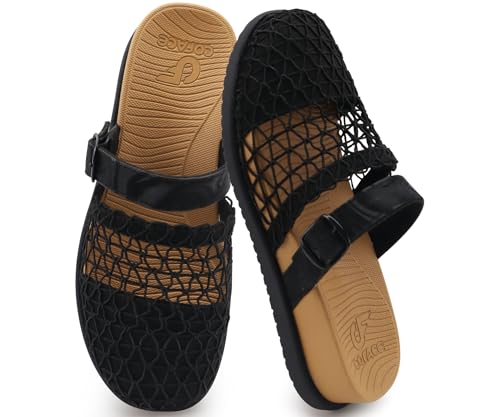
COFACE Orthotic Sandals For Women With Plantar Fasciitis Arch Support
Check price on Amazon
Athlefit Women'S Summer Closed Toe Flat Sandals Ivy Size 11
Check price on Amazon
KuaiLu Womens Orthopedic Arch Support Sandals Summer Walking Beige Size 8.5
Check price on Amazon
Diarilip Closed Toe Sandals for Women: Comfortable Walking Fisherman Shoes
Check price on Amazon
KuaiLu Orthopedic Closed Toe Sandals for Womens Athletic Outdoor Walking
Check price on AmazonRelated Reading
Explore more guides to support your foot health and shoe choices: