
Slippers for Elderly with Swollen Feet
Discover comfortable, adjustable, and safe slippers designed specifically for seniors dealing with swollen feet, edema, or diabetes. Find the perfect blend of support, ease, and security.
SEE TOP PICKSThe ShoesTruth Comfort Promise: Swollen feet shouldn't mean compromised comfort or safety. Our guide helps you navigate the unique challenges of finding footwear for elderly individuals with foot swelling, ensuring every step is secure, pain-free, and dignified.
Why Regular Slippers Fail Swollen Feet
As we age, circulation changes, medical conditions like edema or diabetes become more common, and feet can change shape and size. Standard slippers are often too narrow, lack adjustable closures, and offer insufficient support. This can lead to discomfort, skin irritation, tripping hazards, and even serious foot injuries. For the elderly, walking shoes without laces for ladies offer a secure alternative for outdoor use, but for indoors, a specialized slipper is essential.
The right pair of slippers for swollen feet must address three critical factors: adjustability (to accommodate changing foot sizes throughout the day), cushioning (to relieve pressure on sensitive areas), and safety (with slip-resistant soles to prevent falls). Without these features, seniors are at risk of avoidable accidents and discomfort.
Key Features to Look For
Adjustable Closures
Velcro straps, hook-and-loop fasteners, or bungee laces allow the slipper to expand and contract as swelling fluctuates. This is the single most important feature for swollen feet.
Extra Wide Widths
Look for slippers explicitly labeled as "wide," "extra-wide," or "bariatric." A wide toe box prevents pressure on bunions, hammertoes, and sensitive toes.
Plush Cushioning
Memory foam, gel insoles, or thick EVA foam midsoles absorb shock and distribute weight evenly, reducing pain from standing or walking.
Slip-Resistant Soles
Rubber outsoles with deep treads provide traction on tile, hardwood, and linoleum, significantly reducing the risk of falls—a critical concern for the elderly.
Breathable Materials
Mesh, knit, or soft leather uppers allow air circulation, keeping feet dry and reducing the risk of fungal infections, which are more common in swollen feet.
Lightweight Construction
Heavy slippers tire seniors quickly. Opt for lightweight materials that don't add extra burden to already tired or painful feet.
Types of Slippers Compared
| Type | Best For | Key Feature | Typical Price |
|---|---|---|---|
| Adjustable Velcro Slippers | Moderate to severe swelling | Customizable fit | $30–$60 |
| Memory Foam House Shoes | Mild swelling & daily comfort | Pressure relief | $25–$50 |
| Diabetic Slippers | Diabetes & neuropathy | Seamless interior | $40–$80 |
| Bariatric Slippers | Severe swelling & wide feet | Extra-wide fit | $50–$90 |
| Moccasin-Style Slippers | Mild swelling & warmth | Cozy lining | $35–$70 |
Recommended Slippers for Swollen Feet
⚠️ AFFILIATE DISCLOSURE: This website contains affiliate links. As an affiliate Associate, we earn from qualifying purchases. If you make a purchase through these links, we may receive a small commission at no additional cost to you. Read our full affiliate policy.
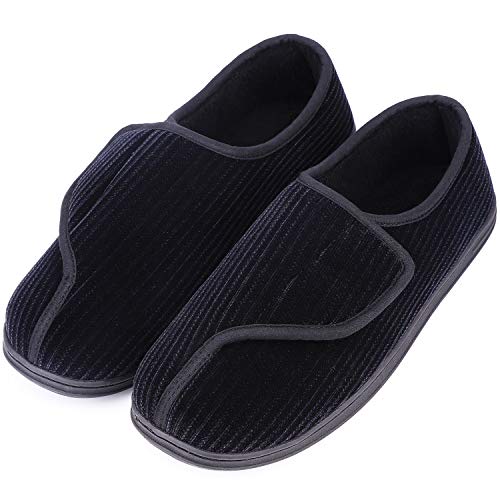
LongBay Men's Memory Foam Diabetic Slippers Comfy Warm Plush Fleece Arthritis Edema Swollen House Shoes (10, Black)
Check price on Amazon
Sisttke Diabetic Shoes for Women Wide Width,Blue,7.5 Wide Women | Adjustable Diabetic Slippers,Orthopedic Barefoot House Shoes,Slippers for Elderly Swollen Feet Edema Arthritis Indoor Outdoor
Check price on Amazon
L-RUN Women's Diabetic Slippers Wide Width Elderly Shoes Breathable Swollen Feet Walking Edema Sneakers Black 9.5 Wide
Check price on Amazon
BARERUN Slippers for Women Men Womens Mens Diabetic Slippers Wide Width Diabetic Slipper Socks for Wide Feet Unisex Slipper for Adults Beige 8-9 Women 6.5-7.5 Men
Check price on AmazonEssential Buying Checklist
Before purchasing slippers for an elderly person with swollen feet, verify these critical points:
- Measure feet at the end of the day when swelling is typically at its worst. This ensures the slipper accommodates the maximum foot size.
- Check the weight — lightweight slippers (under 1 lb per pair) are easier for seniors to lift and walk in.
- Look for a back or heel strap to prevent the slipper from slipping off, which can cause falls. For alternatives, consider walking shoes without laces for ladies.
- Ensure the insole is removable so you can replace it with custom orthotics or arch support insoles for overpronation if needed.
- Verify the sole is non-marking and slip-resistant — this is non-negotiable for safety on smooth floors.
- Check for seam-free interiors to prevent friction blisters and ulcers, especially important for diabetics.
- Confirm the return policy — fit can be tricky, so a generous return window is essential.
Expert Tips for Maximum Comfort
Even the best slippers need to be worn correctly. Here are additional recommendations to enhance comfort and safety:
- Rotate pairs: Having two pairs allows one to air out while the other is worn, reducing moisture and odor.
- Use compression socks: Wearing compression socks during the day can reduce swelling, making slippers fit more comfortably.
- Elevate feet when sitting: This simple habit reduces swelling and improves circulation.
- Inspect feet daily: Check for redness, blisters, or cuts—especially important for diabetics who may have reduced sensation.
- Replace worn slippers: When the sole wears down or the cushioning flattens (usually every 6–12 months), replace them immediately.
For those who need extra support, over-the-counter insoles for flat feet can be added to most slippers with removable footbeds. Additionally, if the elderly person walks outdoors frequently, consider comfortable shoes for work and walking as a more secure alternative to traditional slippers.
Ready to Find the Perfect Pair?
Browse our curated selection of top-rated slippers designed specifically for elderly individuals with swollen feet. Comfort, safety, and dignity—all in one purchase.
View Recommended ProductsFrequently Asked Questions
Adjustable velcro slippers are generally the best choice because they can expand and contract as swelling changes throughout the day. Look for models with extra-wide toe boxes, memory foam cushioning, and slip-resistant rubber soles. Diabetic slippers are also excellent, as they feature seam-free interiors to prevent irritation.
Yes, slippers with a back or heel strap are strongly recommended for elderly individuals. Backless slippers can slip off easily, increasing the risk of falls. A secure heel strap keeps the foot in place and provides better stability. If a backless design is preferred for ease of putting on, ensure the slipper has a deep heel cup and a snug but adjustable fit.
You should replace them every 6 to 12 months, or sooner if you notice the cushioning has flattened, the soles are worn, or the fabric is stretched out. Worn-out slippers lose their supportive and shock-absorbing properties, which can lead to discomfort and safety issues. For diabetics, inspect slippers regularly for tears or foreign objects inside.
Yes, memory foam slippers can be very beneficial because they mold to the shape of the foot, distributing pressure evenly and reducing peak pressure points. However, they should be combined with other features like adjustable closures and a wide toe box. Some memory foams can flatten over time, so choose a high-density foam for better durability.
Yes, if the slipper has a removable insole, you can replace it with a custom orthotic or an over-the-counter insole. This is especially helpful for individuals with plantar fasciitis, flat feet, or high arches. Just ensure the slipper is deep enough to accommodate the additional volume without making the fit too tight. For more options, see our guide on arch support insoles for overpronation.
Final Thoughts
Finding the right slippers for an elderly person with swollen feet is an act of care. It's about restoring comfort, confidence, and independence. By prioritizing adjustability, cushioning, and safety, you can significantly improve their daily quality of life. Remember to measure feet at their largest, choose breathable materials, and always opt for slip-resistant soles. With the right pair, every step can be a comfortable one.
For those who need even more support for outdoor activities, explore our guides on comfortable shoes for work and walking and good sneakers for working on your feet. And for specialized needs, don't miss our recommendations for comfortable shoes for wide feet for women.