
What Is Supination (Underpronation)?
When you walk or run, your foot should roll slightly inward — about 15% — to absorb shock. This natural motion is called pronation. If your foot rolls outward instead, you have supination, also known as underpronation. The result is that your body weight concentrates on the outer edge of your foot, from the pinky toe down to the outer heel.
Supination is less common than overpronation, but it can cause just as many problems: ankle instability, outer-knee pain, iliotibial (IT) band syndrome, and even hip misalignment. Because your foot doesn't absorb shock efficiently, the impact travels up your leg with every step. If you're already managing chronic foot pain, you may also benefit from reviewing shoes with good support for plantar fasciitis, since supination and plantar issues often overlap.
Common signs of supination include:
- Wear patterns on the outer edge of your shoe soles
- Frequent ankle sprains or rolling
- Calluses or pain along the outer side of the foot
- High, rigid arches
- Aches in the outer knee, hip, or lower back after walking
Why Insoles Matter for Supination
Standard shoe insoles are flat and offer little lateral control. For a supinator, that's a problem: without support under the outer arch and heel, the foot keeps rolling outward with every step. A dedicated supination insole addresses this by:
- Cushioning the outer edge of the foot to absorb impact where you need it most
- Supporting the lateral arch to discourage excessive outward rolling
- Stabilizing the heel with a deep heel cup that keeps the foot centered
- Redistributing pressure away from the outer metatarsals and heel
Unlike insoles designed for flat feet (which add medial, or inner-arch support), supination insoles focus on lateral (outer) cushioning and neutral-to-firm heel stability. This is a critical distinction: putting a flat-foot insole in a supinator's shoe can actually worsen the outward roll. If you're unsure which direction your feet roll, a quick gait analysis at a specialty running store is worth the visit.
For people who spend long hours on their feet, insoles are not a luxury — they're preventive care. If your work involves standing all day, pairing supination insoles with podiatrist-recommended shoes for standing all day can dramatically reduce fatigue and joint stress.
Key Features to Look For in Supination Insoles
Not every insole marketed as "arch support" will help a supinator. Here are the features that matter most:
Deep Heel Cup
A contoured heel cup cradles the heel bone and limits side-to-side movement, reducing the outward roll that defines supination.
Lateral Cushioning
Extra padding along the outer edge absorbs shock where supinators strike hardest — the outer heel and outer forefoot.
Neutral to Firm Arch
Avoid aggressive medial arch bumps. Look for a neutral or gently contoured arch that supports without pushing the foot outward.
Shock-Absorbing Base
Materials like gel, EVA, or polyurethane in the forefoot reduce the impact that travels up the leg with each step.
Trim-to-Fit Design
Most over-the-counter insoles can be trimmed with scissors to match your shoe's original insole. This ensures a precise fit.
Breathable Top Cover
Moisture-wicking fabric keeps feet dry, which matters if you wear insoles during long walks or work shifts.
Insole Types Compared
Understanding the different categories helps you choose the right product without overspending. Here's how the main types stack up:
| Insole Type | Best For | Lateral Support | Typical Price |
|---|---|---|---|
| Flat Cushion Insoles | Mild comfort needs | Low | $15–$30 |
| Neutral Arch Insoles | Mild supination, high arches | Moderate | $30–$60 |
| Supination-Specific Insoles | Moderate to severe supination | High | $40–$80 |
| Custom Orthotics | Severe supination, structural issues | Very High | $200–$500 |
For most people with mild to moderate supination, an over-the-counter supination-specific insole is enough. Custom orthotics are reserved for cases where structural deformities, severe pain, or post-surgical needs are present. If your supination is linked to high arches, you may also want to explore orthotics for high arches and plantar fasciitis for a more targeted solution.
Recommended Insoles for Walking on the Outside of Your Feet
Below is a curated selection of insoles that address lateral instability, heel support, and shock absorption — the three pillars of supination management. These are updated regularly based on availability and pricing.
Best Insoles for Supination & Outer Foot Pain
⚠️ AFFILIATE DISCLOSURE: This website contains affiliate links. As an affiliate Associate, we earn from qualifying purchases. If you make a purchase through these links, we may receive a small commission at no additional cost to you. Read our full affiliate policy.

WalkHero Arch Support Inserts for Women Men, Plantar Fasciitis Relief | Orthotic Insoles for Foot Pain Arch Pain, Flat Feet Insole Reduce Muscle Fatigue Absorb Shock (Mens 7-7 1/2 | Womens 9-9 1/2)
Check price on Amazon
Dr. Scholl’s Sport Insoles Arch Support Inserts for Men, Shoe Inserts | Gel insoles for men, superior shock absorption, sport insoles for shoes, reduce stress on lower body joints, Men Size 8-14
Check price on Amazon
240+lbs Plantar Fasciitis Relief Insoles Men Women High Arch Support Insert | 100% Memory Foam Heavy Duty Orthotic Arch Insoles for Foot Pain Relief, Comfort Work Boots Shoe Inserts, Flat Feet, Pronation
Check price on Amazon
4D Cloud Soles for Men Women,Cloud Insoles,Shoe Inserts Cuttable,Anti Fatigue,Shock Absorption,Foot Pain Relief (Black,Men: 7-7.5/Women: 8-8.5)
Check price on Amazon
PowerStep Pinnacle Hiker Orthotic Insoles, Arch Support for Hiking Boots, Plantar Fasciitis Pain Relief, Mild Pronation, Maximum Cushion, Unisex, Made in The USA (Men's 6-6.5 / Women's 8-8.5)
Check price on Amazon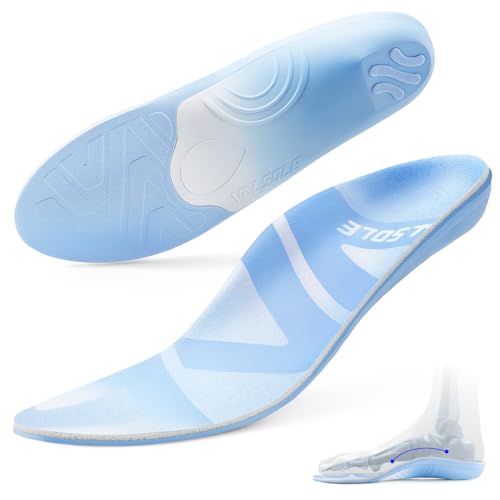
VALSOLE Plantar Fasciitis Relief Insoles - Heavy Duty Arch Support Inserts for Men and Women - All Purpose Orthotic Insoles for Foot Pain Relief - Comfort Insert for Work, Walking, Hiking
Check price on Amazon
Heel Wedge for Over-Supination/Over-Pronation Re-Usable Adhesive Soul Insole
Check price on Amazon
Dr. Foot's Supination Insoles & Overpronation Insoles, Medial & Lateral Heel Cups for Foot Alignment, Knee Pain, Bow Legs, Osteoarthritis (Large - Women's 12-13.5|Men's 11-14, Clear)
Check price on AmazonHow to Fit Insoles Correctly
Even the best insole won't work if it's not fitted properly. Follow these steps:
- Remove the original insole. Most shoes come with a removable insole. Take it out and use it as a template.
- Trace and trim. Place your new insole on top of the original, trace the outline, and trim with sharp scissors. Trim in small increments — you can always remove more, but you can't add it back.
- Insert with the heel first. Slide the heel into place, then press down along the length of the shoe.
- Test the fit. Walk around for a few minutes. Your toes should not feel cramped, and the insole should not slide forward.
- Break them in gradually. Wear new insoles for 1–2 hours a day for the first week. This gives your feet time to adapt.
If you wear orthotic devices prescribed by a podiatrist, look for shoes with removable insoles so you can swap them in and out easily. Our guide to women's shoes with removable insoles for orthotics covers the best options for that scenario.
When Outside Foot Pain Is More Than Supination
Supination is a common culprit for outer-foot pain, but it's not the only one. If you experience persistent pain on the outside of your foot, it could also be:
- Peroneal tendonitis — inflammation of the tendons that run along the outer ankle and foot
- Cuboid syndrome — a misaligned cuboid bone that causes lateral foot pain
- Stress fracture of the fifth metatarsal (the long bone leading to the pinky toe)
- Ankle instability from repeated sprains
If pain is sharp, persistent, or accompanied by swelling, see a doctor or podiatrist before self-treating with insoles. Insoles can help manage symptoms, but they won't fix a fracture or tendon tear. For general foot health, pairing the right insoles with comfortable shoes for walking and standing all day gives you the best foundation.
Stop Rolling Outward. Start Walking Comfortably.
The right insole can change how your entire body moves. Browse our top picks and find your match.
Shop Recommended Insoles